English
 لالعربية
Agricultural Crop Protection UAV
Agricultural Crop Protection UAV
05:40, and the window is closing. The scouting report came in yesterday evening: armyworm pressure on the northern block, and the county extension office is warning that egg hatch peaks in three days°REF. The block is 120 hectares°REF of late maize on terraced ground. To spray it with knapsacks you would need 15 to 20 workers°REF working three shifts — and the contractor can send six.
This is the arithmetic that defines modern crop protection. Not technology enthusiasm. Arithmetic: hectares, hours, and a biological clock that does not negotiate. Rongyixin's agricultural UAV exists for exactly this morning.
The problem, as growers actually describe it.Strip away the brochure language and five complaints come up every season.
There is nobody to send. Field labour is ageing and moving to cities. Seasonal wages rise while availability falls, and the people who remain are often past the age for ten hours of knapsack work in August heat.
The window is brutally short. Fungicide and insecticide efficacy depends on hitting a specific growth stage or pest instar. Miss 48 to 72 hours°REF and the application cost is wasted regardless of how carefully it was done.
The ground does not cooperate. Terraces, paddy fields, orchards with grass cover, soft ground after irrigation — a boom sprayer either cannot enter or compacts and crushes what it drives over.
Consistency is invisible. A knapsack operator walking at an uneven pace over-applies in some passes and under-applies in others. Nobody can prove what went where.
And it is dangerous. Manual spraying means direct chemical exposure, on slopes, in heat, for hours.
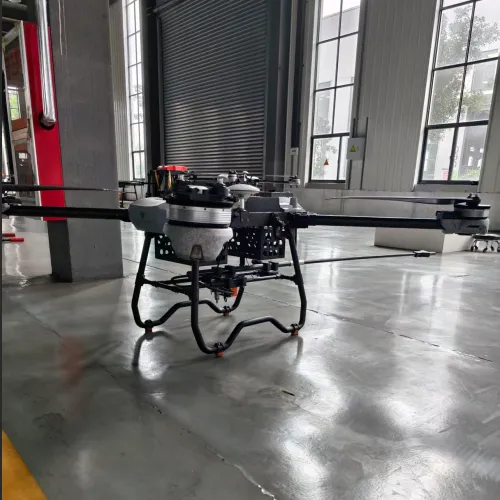
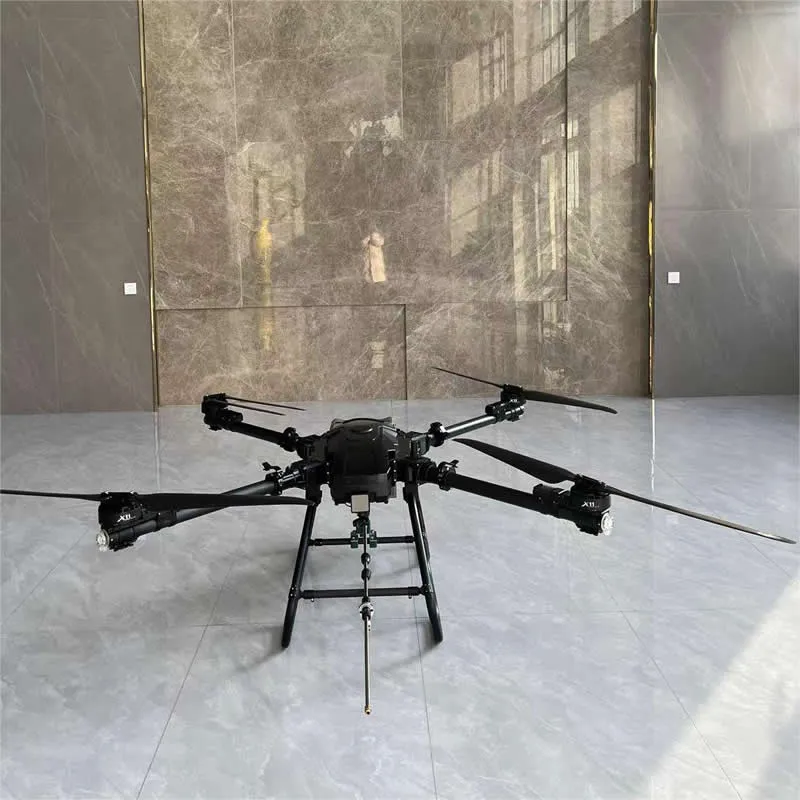
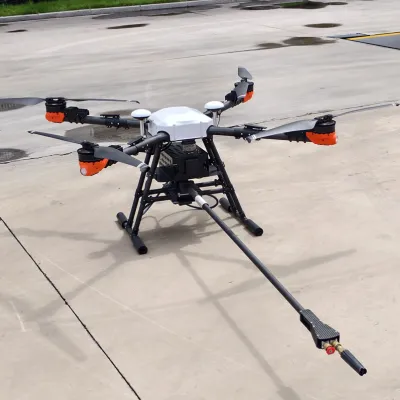
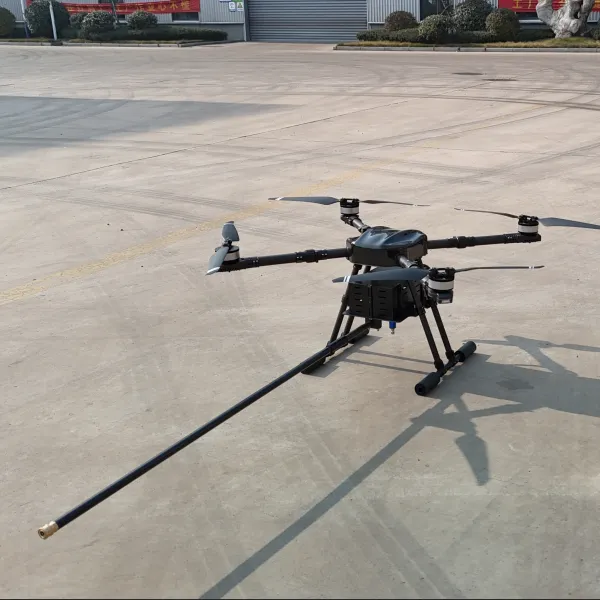
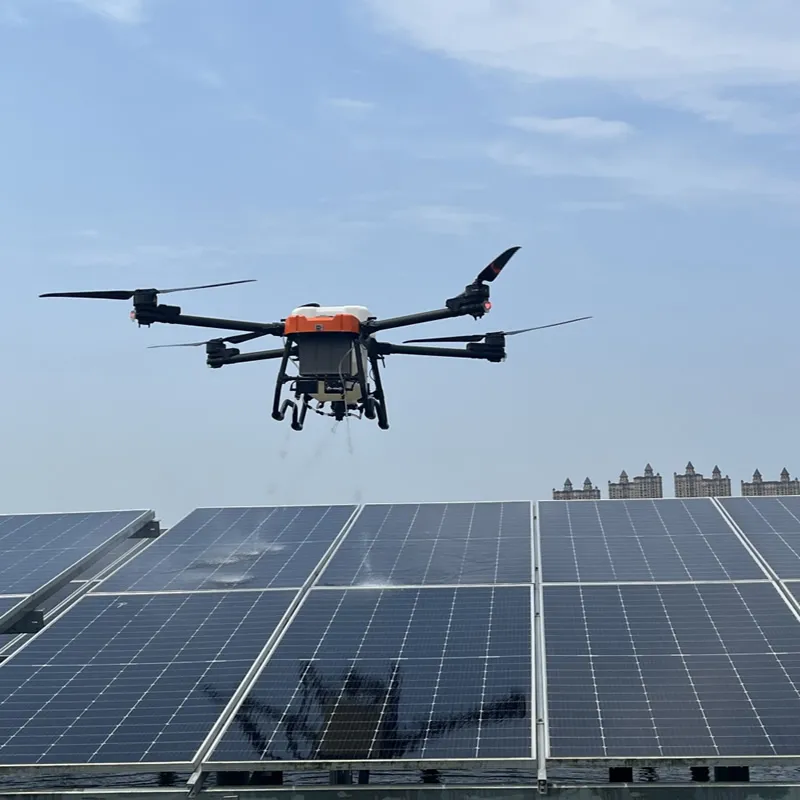
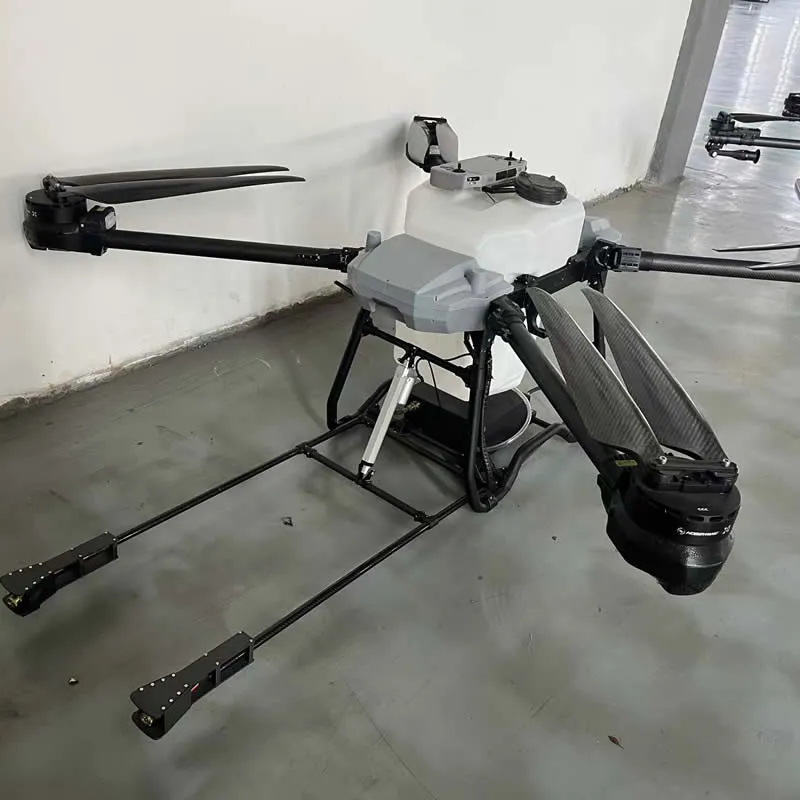
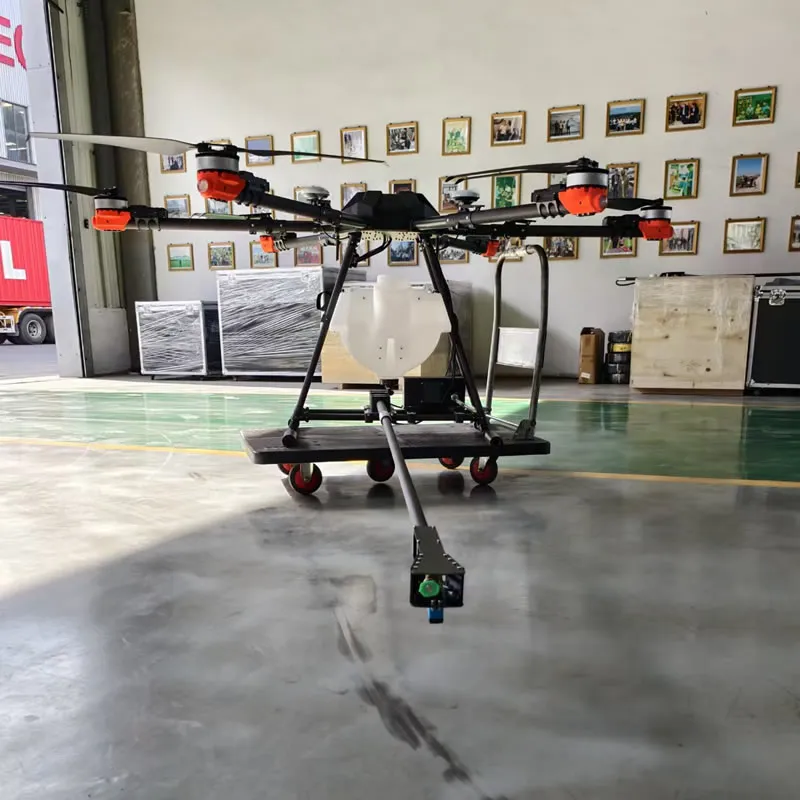
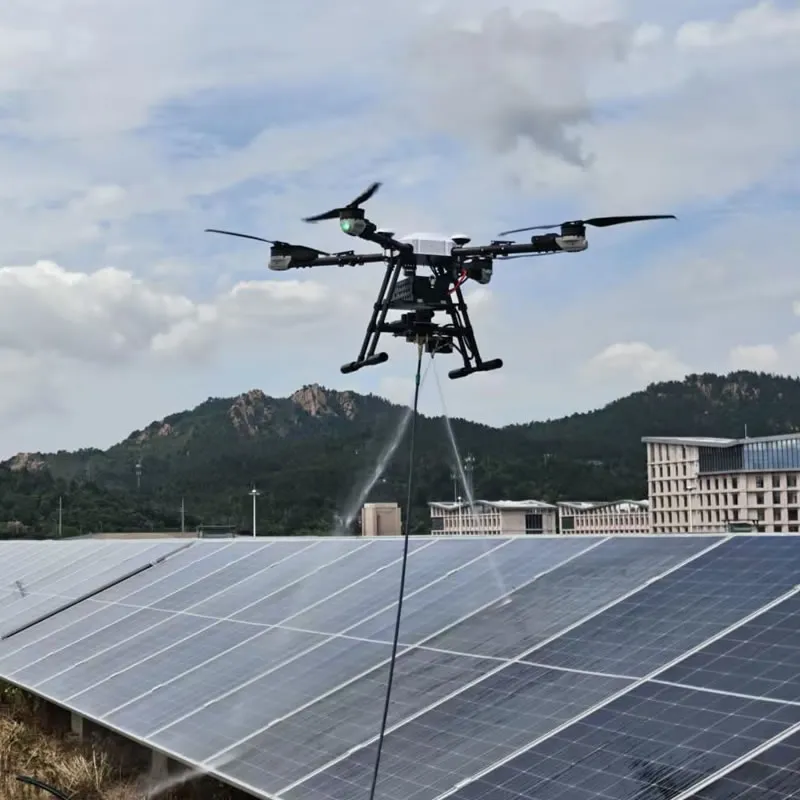
What the aircraft does about it. A Rongyixin agricultural UAV is a 40-litre°REF application platform with an effective swath of around 7 metres°REF. It flies a pre-planned, RTK-guided route at a constant height above the canopy, meters the liquid through a closed-loop flow system, and returns to the refill point automatically when the tank is empty. The practical result: 8 to 12 hectares per hour°REF per aircraft, with one operator supervising three to five aircraft°REF working the same block. The 120-hectare job that needed three days and twenty people becomes a single morning for a two-person crew.
Capabilities that matter on a working farm.
Dose that stays constant. Flow is metered continuously and adjusted to ground speed, so accelerating out of a turn does not thin the application. Droplet size is selectable across roughly 80–250 μm°REF — fine enough for contact fungicides, coarse enough to limit drift when the wind picks up.
Terrain following that actually follows. Millimetre-wave radar holds a constant 1.5–3 metre°REF canopy distance over terraces and hillsides, keeping droplet travel distance — and therefore coverage — consistent.
Centimetre-level passes. RTK guidance keeps adjacent swaths parallel, which eliminates both missed strips and the double-dosed overlap that wastes chemical and burns foliage.
Water and chemical discipline. Where conventional spraying applies 400–900 litres per hectare°REF, aerial application works at 12–20 litres per hectare°REF — a 90%+°REF reduction in water hauled and a 20–30%°REF reduction in active ingredient, because the rotor downwash drives droplets into the lower canopy where pests actually live.
Turnaround measured in seconds. Hot-swap batteries and a 30-second°REF refill cycle keep the aircraft in the air instead of on the ground.
A record you can defend. Every flight logs area, volume, rate, wind and temperature. When a buyer or auditor asks what was applied to a lot, the answer is a file, not a memory.
Field-serviceable. An IPX6-class°REF airframe washes down at the end of the day; pumps, nozzles and booms are modular and replaceable in the field without special tools.
A morning in the field.
06:00 — Boundary and prescription. The block was mapped once at planting. Today the operator loads a prescription map that reduces the rate on the low-lying strip where scouting found no pressure.
06:15 — Planning. Software generates routes from the field boundary; the operator sets swath, rate and height, and marks the two power-line crossings and the windbreak.
06:30 — Calibration and checks. Nozzle output verified with a graduated cylinder, flow meter cross-checked, batteries and weather confirmed: wind under 8 m/s°REF, no rain for six hours°REF.
06:45 — Application. Three aircraft launch. They spray, return, refill and resume automatically. The crew manages liquid and batteries. Obstacle radar handles the windbreak; the aircraft steps over the power line.
10:30 — Done, documented. 112 hectares°REF completed. The system exports an application map, chemical consumption, and a per-block completion record. The remaining eight hectares are scheduled around the afternoon wind.
What it means for the bottom line.
Measure | Knapsack / ground rig | Rongyixin UAV |
Daily coverage | 4–6 ha°REF per worker | 60–90 ha°REF per aircraft |
Crew required | 15–20°REF | 2°REF (1 operator + 1 mixer) |
Water use | 400–900 L/ha°REF | 12–20 L/ha°REF |
Chemical use | baseline | −20% to −30%°REF |
Operator exposure | direct, all day | loading only, closed transfer |
Crop loss from traffic | 2–5%°REF | none |
Payback | — | 6–12 months°REF at 400+ ha/year°REF |
Where it fits. Row crops — rice, wheat, maize, cotton, soybean · orchards, vineyards, tea and coffee · terraced and hilly ground · flooded paddy · large farms, cooperatives and contract service operators · emergency pest and disease response · fertiliser spreading and cover-crop seeding.
Getting started. Send us three numbers: crop, seasonal hectarage, and your tightest spraying window. We will size the fleet, specify the tank and nozzle package, and return a cost-per-hectare comparison against your current method.
Reference specification (confirm before publishing): Tank capacity 40 L · Effective swath 7 m · Application rate 12–20 L/ha · Throughput 8–12 ha/h · Droplet size 80–250 μm (selectable) · Terrain-following height 1.5–3 m · Guidance RTK, centimetre-level · Max wind ≈8 m/s · Ingress protection IPX6-class airframe.
related products