English
 لالعربية
EV (Power) Smart Factory Solutions
EV (Power) Smart Factory Solutions
The dirty secret of a clean energy asset. A 200 MW°REF ground-mounted plant in an arid region is not really a technology asset. It is a glass-cleaning business that happens to generate electricity. Left unwashed for eight weeks in a dusty season, output falls by 15–25%°REF. On a plant with a healthy 20%°REF capacity factor, that is real money evaporating every sunny hour — and the loss is invisible from the control room unless someone is actively looking for it. So the plant manager orders a clean. Then the problems start.
Why conventional cleaning breaks down.
Water. A full manual wash of a plant this size consumes 2,000–4,000 cubic metres°REF of water. In the regions with the best irradiation, water is exactly what does not exist — or has to be trucked in at a cost that rivals the electricity being recovered.
Access. Rows on uneven desert ground, hillside arrays, rooftop installations with no anchor points, floating plants over water. Manual crews need scaffolding, walkways, or rope access, and every one of those adds cost, permits and schedule risk.
Risk. Crews work on tilted glass, at height, in 40 °C+°REF heat. Slips, falls and heat stress are not theoretical. Neither is micro-cracking glass by leaning a ladder or walking the wrong panel.
Damage. Pressure washers in untrained hands etch anti-reflective coatings and force water into junction boxes. The cleaning recovers energy and quietly costs module life.
Downtime. Conventional teams work during the day, on the very hours the plant is earning.
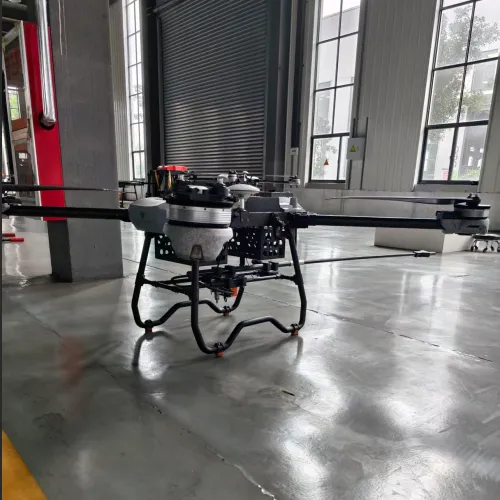
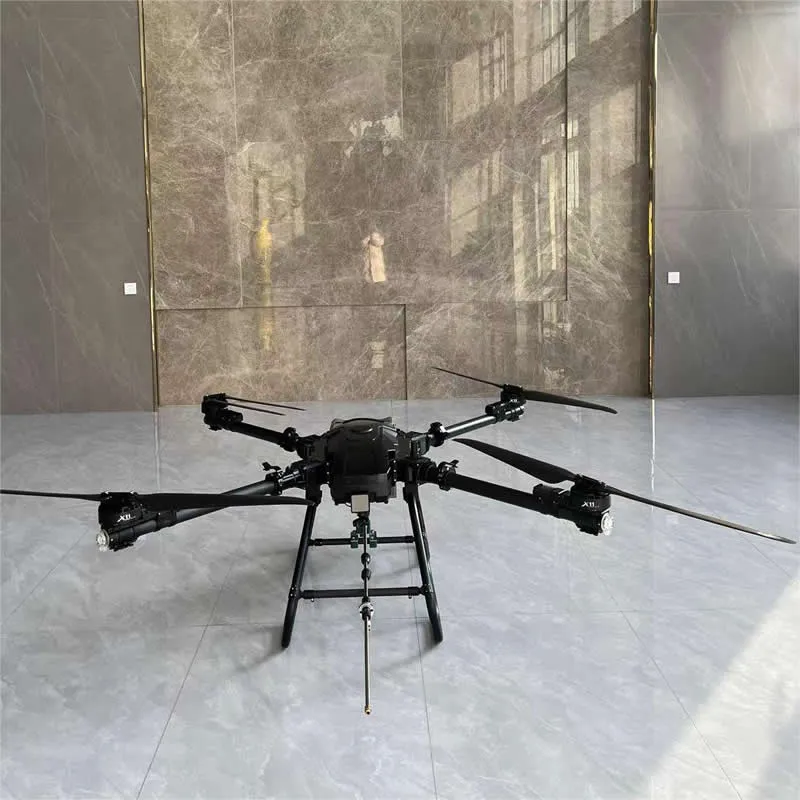
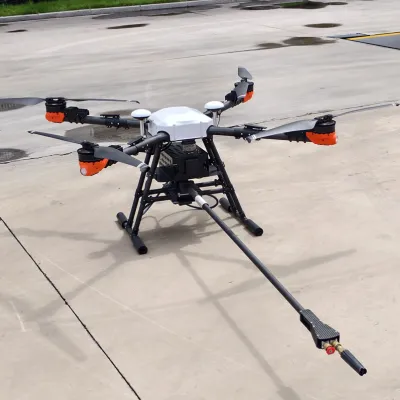
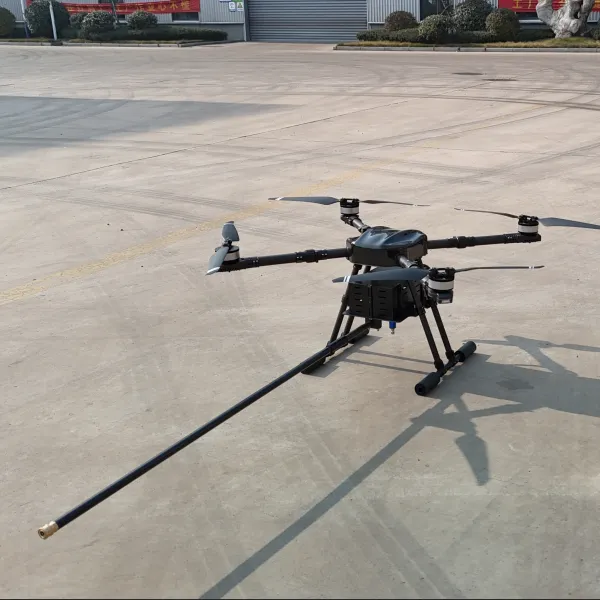
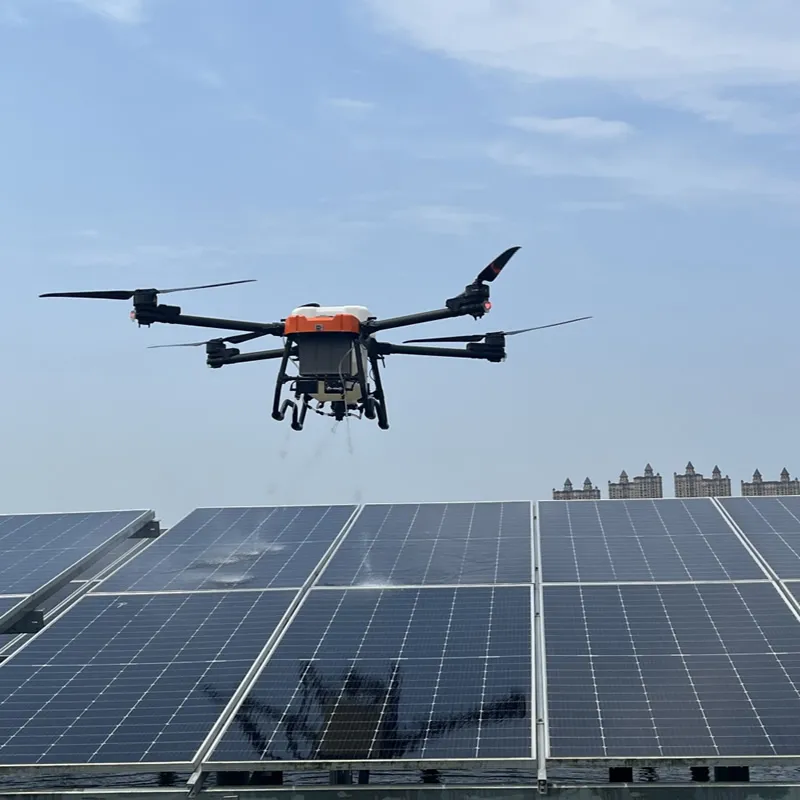
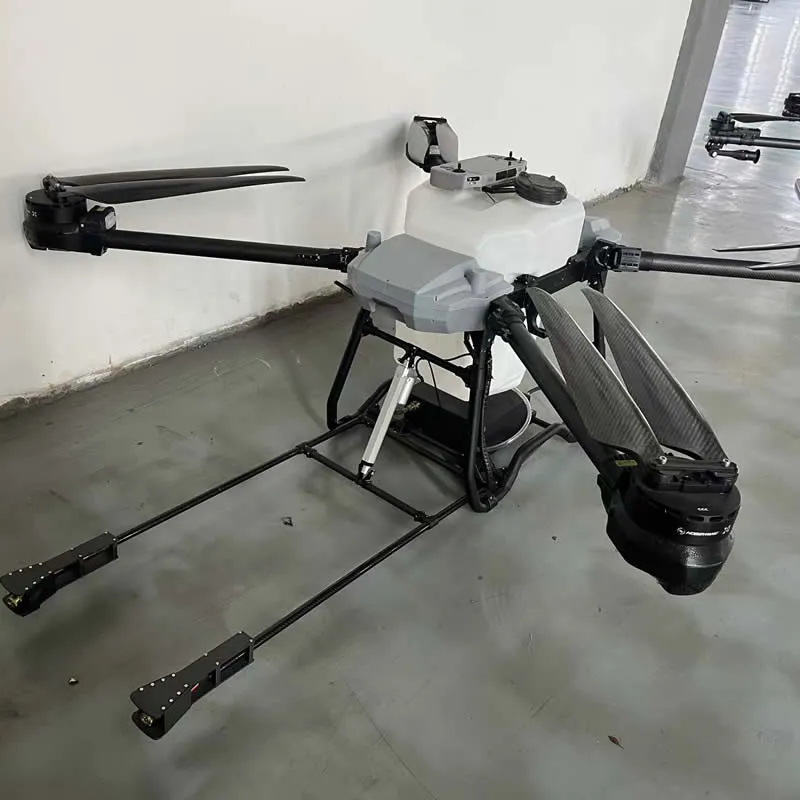
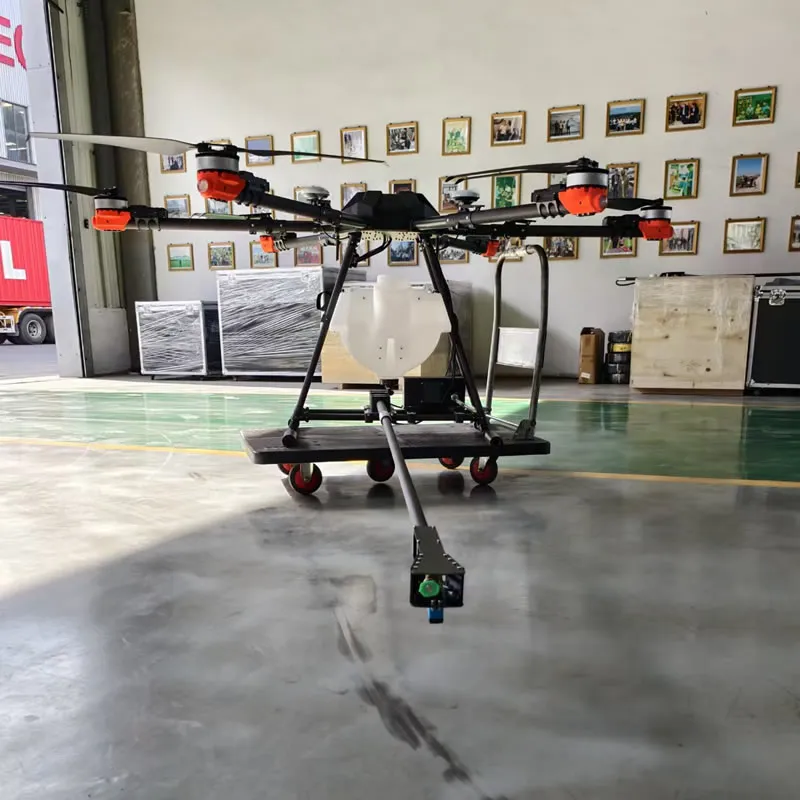
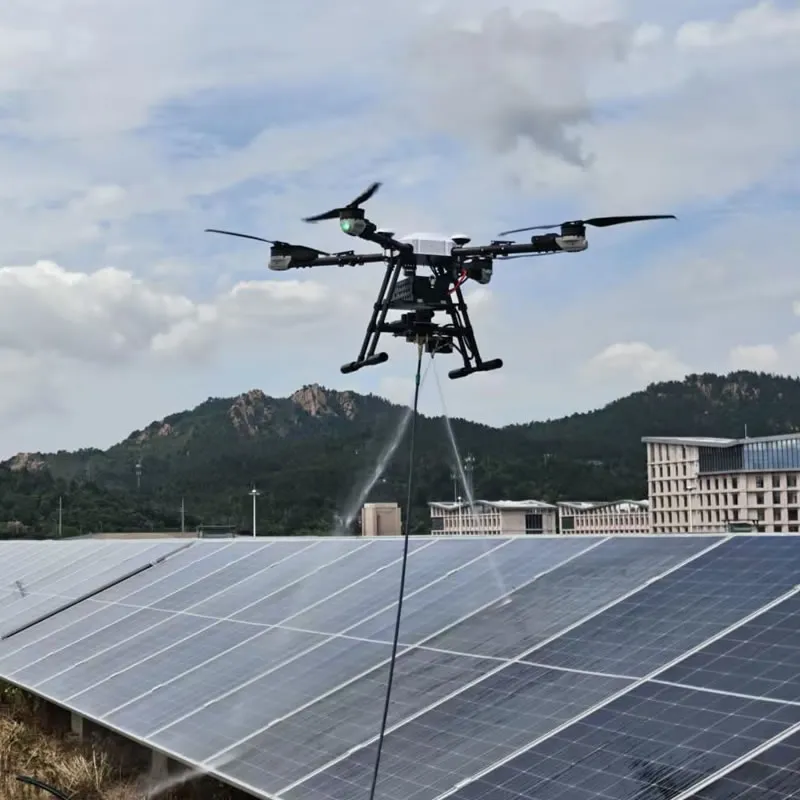
What the aircraft does. The Rongyixin cleaning UAV flies a controlled wash along the panel rows, holding a fixed standoff and a controlled spray angle. A fine, atomised mist — not a pressure jet — loosens and carries off the soiling film. Cleaning happens at night or before sunrise°REF, so generation is never interrupted, and no one leaves the ground. Coverage: up to 1.5 MW per hour°REF per aircraft, roughly 10–12 MW per night shift°REF with a two-person crew and hot-swap batteries. A 200 MW°REF plant turns over in about three weeks°REF on a normal cycle — with no scaffolding, no shutdown, and no water trucks°REF.
Capabilities that matter to an O&M manager.
Gentle by design. Adjustable pressure in the 20–60 bar°REF range with a fan nozzle pattern spreads the load across the glass. For stubborn deposits — cemented dust, bird droppings — a soft-brush head runs instead of water pressure. Anti-reflective coatings survive.
Water reduction that changes the economics. Atomised delivery uses 70–85% less water°REF than a manual wash. Where water is unavailable altogether, a dry-brush configuration cleans with no water at all°REF.
Consistent geometry every pass. Terrain and row following hold 0.5–1.5 metres°REF standoff and a constant incidence angle, so row 1 and row 400 get the same treatment — the thing human crews are worst at.
Clean and inspect in one flight. An optional thermal camera runs during or after the wash, flagging hot spots, cell failures, bypass-diode faults and soiling patterns that indicate a drainage or tilt problem. One mobilisation, two deliverables.
Work when the sun is down. Low-light operation with onboard lighting means the plant is cleaned on the hours it is not producing.
Fast in, fast out. Under 15 minutes°REF from vehicle to airborne; 8–12 minute°REF working cycles with battery hot-swap.
Auditable output. Per-block cleaning maps, thermal findings and an estimated energy-recovery figure for each section cleaned.
A night on site.
21:00 — Soiling assessment. A quick survey pass with the thermal camera establishes the baseline; the software estimates loss per block.
21:30 — Row mapping. Flight paths are generated from the array layout, accounting for tilt angle, row pitch and terrain.
22:00 — Cleaning. Two aircraft work adjacent blocks in overlapping passes. The supervisor monitors pressure, flow and battery state; water is supplied from a 2 m³°REF tanker that replaces a fleet of trucks.
03:00 — Thermal verification. A second pass confirms cleaning quality and captures hot-spot data.
05:30 — Report. Before/after imagery, per-block recovery estimate, and a maintenance list of any thermal anomalies — delivered before the morning crew arrives.
What it means for the bottom line.
Measure | Manual cleaning | Rongyixin UAV |
Water per cycle | 2,000–4,000 m³°REF | 300–600 m³°REF |
Daily coverage | 1–2 MW°REF | 10–12 MW°REF |
Cost per MW cleaned | baseline | −30% to −50%°REF |
Energy recovery | +8% to +15%°REF | +15% to +22%°REF |
Work at height | continuous | eliminated |
Shutdown required | often | none (night operation) |
Payback | — | 8–18 months°REF |
Where it fits. Utility-scale ground-mounted PV · desert and high-dust regions · commercial and industrial rooftops · hillside and mountainous arrays · floating solar · greenhouse and glass-roof structures · wind-turbine blade and tower washing (configuration-dependent).
Getting started. Send us installed capacity, row layout and pitch, tilt angle, and your water situation. We will model the soiling loss, the water saving and the payback for your specific site — not a generic one.
Reference specification (confirm before publishing): Working pressure 20–60 bar (adjustable) · Standoff height 0.5–1.5 m · Coverage rate ≈1.5 MW/h · Water saving vs manual 70–85% · Dry-cleaning mode available (zero water) · Operating window night / pre-dawn, low light · Setup time <15 min · Optional payload thermal camera, soft-brush head.
related products